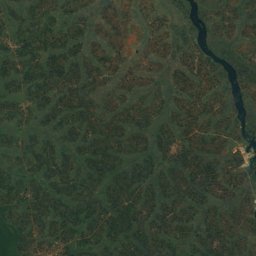
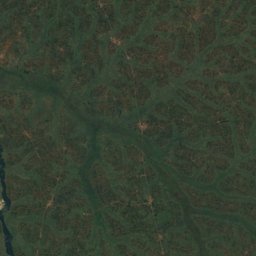
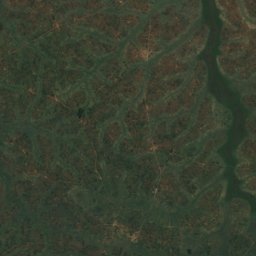

The sky over Bugambo
Tonight in Bugambo the moon rises at 16:23 and sets at 04:44; it is a waxing gibbous, 88% lit. The next full moon is on 26 October 2026. The next solar eclipse seen from here is the partial solar eclipse of 2 August 2027: 26% of the sun covered at 13:51. The next lunar eclipse you can see is the penumbral lunar eclipse of 21 February 2027. Planets you can see tonight from Bugambo: Mercury, Mars, Jupiter and Saturn.
The moon tonight
Waxing gibbous · 88%
Moonrise 16:23 · Moonset 04:44
Distance: 384,269 km
Planets tonight
| Highest | Rises | Sets | Brightness (magnitude) | |
|---|---|---|---|---|
| MercuryIn the evening | 18:56 · west · 12° | 07:49 | 19:51 | 0.4 |
| VenusNot visible tonight | – | 06:26 | 18:27 | -4.3 |
| MarsBefore dawn | 06:06 · north-east · 60° | 01:46 | 13:51 | 1.0 |
| JupiterBefore dawn | 06:06 · north-east · 54° | 02:22 | 14:25 | -2.0 |
| SaturnAll night | 23:16 · north-east · 89° | 17:17 | 05:20 | 0.3 |
From the Sun 6° below the horizon in the evening to 6° in the morning; a planet counts as visible at 8° or more above the horizon.
Phases of the moon · October 2026
| Date | Phase | Lit | Moonrise | Moonset |
|---|---|---|---|---|
| Thu 1 | Waning gibbous | 74% | 23:01 | 10:30 |
| Fri 2 | Waning gibbous | 64% | – | 11:33 |
| Sat 3 | Last quarter · 16:25 | 52% | 00:04 | 12:35 |
| Sun 4 | Waning crescent | 41% | 01:06 | 13:35 |
| Mon 5 | Waning crescent | 30% | 02:04 | 14:32 |
| Tue 6 | Waning crescent | 20% | 02:58 | 15:24 |
| Wed 7 | Waning crescent | 12% | 03:49 | 16:12 |
| Thu 8 | Waning crescent | 6% | 04:36 | 16:58 |
| Fri 9 | Waning crescent | 2% | 05:21 | 17:42 |
| Sat 10 | New moon · 18:50 | 0% | 06:06 | 18:27 |
| Sun 11 | Waxing crescent | 1% | 06:51 | 19:12 |
| Mon 12 | Waxing crescent | 3% | 07:37 | 19:59 |
| Tue 13 | Waxing crescent | 8% | 08:25 | 20:48 |
| Wed 14 | Waxing crescent | 14% | 09:15 | 21:38 |
| Thu 15 | Waxing crescent | 21% | 10:06 | 22:30 |
| Fri 16 | Waxing crescent | 29% | 10:58 | 23:21 |
| Sat 17 | Waxing crescent | 38% | 11:49 | – |
| Sun 18 | First quarter · 19:13 | 47% | 12:38 | 00:11 |
| Mon 19 | Waxing gibbous | 57% | 13:25 | 01:00 |
| Tue 20 | Waxing gibbous | 66% | 14:11 | 01:47 |
| Wed 21 | Waxing gibbous | 75% | 14:55 | 02:32 |
| Thu 22 | Waxing gibbous | 83% | 15:39 | 03:15 |
| Fri 23 | Waxing gibbous | 90% | 16:23 | 03:59 |
| Sat 24 | Waxing gibbous | 96% | 17:08 | 04:44 |
| Sun 25 | Waxing gibbous | 99% | 17:57 | 05:32 |
| Mon 26 | Full moon · 07:12 | 100% | 18:50 | 06:23 |
| Tue 27 | Waning gibbous | 98% | 19:48 | 07:18 |
| Wed 28 | Waning gibbous | 93% | 20:51 | 08:19 |
| Thu 29 | Waning gibbous | 86% | 21:55 | 09:23 |
| Fri 30 | Waning gibbous | 77% | 22:59 | 10:27 |
| Sat 31 | Waning gibbous | 67% | – | 11:30 |
Eclipses
| Date | Type | Begins | Maximum | Ends | Sun covered | Sun's height / Moon's height |
|---|---|---|---|---|---|---|
| 21 February 2027 | Penumbral lunar eclipse | 00:11 | 02:12 | 04:13 | – | 69° |
| 18 July 2027 | Penumbral lunar eclipse | 18:50 | 19:02 | 19:15 | – | 1° |
| 2 August 2027 | Partial solar eclipse | 12:43 | 13:51 | 14:53 | 26% | 68° |
| 12 January 2028 | Partial lunar eclipse | 06:43 | 07:13 | 07:42 | 3% | below the horizon |
| 6 July 2028 | Partial lunar eclipse | 20:08 | 21:19 | 22:30 | 33% | 32° |
| 31 December 2028 | Total lunar eclipse | 18:07 | 19:51 | 21:36 | 100% | 13° |
| 26 June 2029 | Total lunar eclipse | 04:32 | 06:22 | 08:12 | 100% | 6° |
| 21 December 2029 | Total lunar eclipse | 23:54 | 01:41 | 03:28 | 100% | 63° |
| 15 June 2030 | Partial lunar eclipse | 20:20 | 21:33 | 22:45 | 47% | 37° |
| 25 November 2030 | Partial solar eclipse | 07:31 | 08:05 | 08:41 | 8% | 21° |
| 10 December 2030 | Penumbral lunar eclipse | 23:07 | 01:27 | 03:47 | – | 65° |
| 7 May 2031 | Penumbral lunar eclipse | 04:51 | 06:50 | 08:49 | – | below the horizon |
| 21 May 2031 | Partial solar eclipse | 07:21 | 08:33 | 10:00 | 63% | 26° |
| 25 April 2032 | Total lunar eclipse | 16:27 | 18:13 | 19:59 | 100% | below the horizon |
| 18 October 2032 | Total lunar eclipse | 20:24 | 22:02 | 23:40 | 100% | 51° |
| 14 April 2033 | Total lunar eclipse | 20:24 | 22:12 | 00:00 | 100% | 49° |
| 20 March 2034 | Partial solar eclipse | 12:05 | 13:20 | 14:34 | 29% | 84° |
| 3 April 2034 | Penumbral lunar eclipse | 19:52 | 22:05 | 00:18 | – | 48° |
| 28 September 2034 | Partial lunar eclipse | 05:30 | 05:46 | 06:01 | 0% | 12° |
| 19 August 2035 | Partial lunar eclipse | 03:31 | 04:10 | 04:50 | 5% | 38° |
| 12 February 2036 | Total lunar eclipse | 23:30 | 01:11 | 02:53 | 100% | 76° |
| 7 August 2036 | Total lunar eclipse | 03:55 | 05:51 | 07:47 | 100% | 14° |
| 27 July 2037 | Partial lunar eclipse | 05:31 | 07:08 | 08:45 | 85% | below the horizon |
| 5 January 2038 | Partial solar eclipse | 17:39 | 18:28 | 19:12 | 18% | 6° |
Never look at the sun without certified eclipse glasses (ISO 12312-2) — not even when 99% of it is covered. Only during totality itself may you look with the naked eye.
Meteor showers
| Peak | Best time | Radiant height | Expected per hour | Moon at the peak | |
|---|---|---|---|---|---|
| Orionids | 21 October 2026 | 04:38 | 73° | 19 | 78% |
| Northern Taurids | 12 November 2026 | 00:57 | 68° | 5 | 11% |
| Leonids | 18 November 2026 | 05:31 | 58° | 13 | 55% |
| Geminids | 14 December 2026 | 02:26 | 57° | 126 | 25% |
| Ursids | 23 December 2026 | 05:24 | 8° | 0 | 98% |
| Quadrantids | 4 January 2027 | 05:30 | 22° | 36 | 12% |
| Lyrids | 23 April 2027 | 04:38 | 56° | 5 | 95% |
| Eta Aquariids | 6 May 2027 | 05:38 | 49° | 38 | 0% |
| Southern Delta Aquariids | 30 July 2027 | 02:22 | 72° | 24 | 10% |
| Alpha Capricornids | 30 July 2027 | 00:22 | 79° | 5 | 10% |
| Perseids | 13 August 2027 | 05:30 | 31° | 51 | 86% |
| Draconids | 9 October 2027 | 19:40 | 28° | 2 | 67% |
| Southern Taurids | 11 October 2027 | 03:33 | 60° | 4 | 80% |
The sky
How it is calculated
Eclipses, moonrise and moonset and the phases are computed for each place from the positions of the sun and the moon (VSOP87 and ELP theories, accurate to about a minute of arc). Times are local; the height of the sun or moon is above the place's horizon.
Meteor rates assume a dark sky: city lights and haze lower them a lot. The expected number per hour counts the radiant's height and the moon's light at the best hour of the peak night.