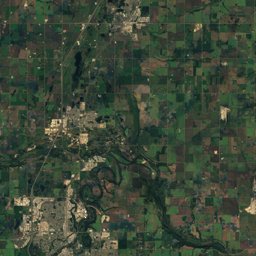
Northern lights in Comet
Yes, often. Comet lies at 58.5° magnetic latitude. The northern lights appear low in the north from Kp 1.2 and overhead from Kp 3.7. In an average year that happens on about 268 nights in true darkness, 164 of them with a clear sky; the best months are August, September and October.
Tonight
Possible low on the horizon
- Darkness
- 19:33 – 06:53
- Highest Kp forecast in the dark
- Kp 2.7 · unsettled
- Kp needed
- on the horizon Kp 1.2 · overhead Kp 3.7
- Clouds
- Cloudy (95%)
- Moon
- 91%
- Kp now
- Kp 2.3 · quiet
Kp forecast for the next three days
Three-hour Kp, observed then forecast. Dashed: the Kp this place needs (horizon, overhead); shaded: dark hours.
Height of the oval above your horizon
- Kp 04°
- Kp 17°
- Kp 214°
- Kp 333°
- Kp 4overhead
- Kp 5overhead
- Kp 6overhead
- Kp 7overhead
- Kp 8overhead
- Kp 9overhead
Look towards: north (11°)
Chance of seeing the lights on a night, by month
Bars: nights with the Kp needed in true darkness × the usual clear sky. Line: hours of darkness.
Aurora at nearby places
- DowlingNights a year: 268Kp 1.3
- ScapaNights a year: 268Kp 1.2
- Dowling LakeNights a year: 268Kp 1.3
- Garden PlainNights a year: 268Kp 1.2
- WattsNights a year: 268Kp 1.3
- HannaNights a year: 268Kp 1.3
- Heart LakeNights a year: 268Kp 1.2
- Sullivan LakeNights a year: 267Kp 1.1
- Batter JunctionNights a year: 268Kp 1.3
- BonarNights a year: 268Kp 1.3
- VictorNights a year: 268Kp 1.3
- CraigmyleNights a year: 268Kp 1.3
Aurora forecast
How it works
The Kp index measures how disturbed the Earth's magnetic field is, from 0 (quiet) to 9 (extreme storm), in three-hour steps. The stronger the disturbance, the further the auroral oval — the ring of light around each magnetic pole — spreads towards the equator.
What counts is the magnetic, not the geographic, latitude. The magnetic pole lies over northern Canada, so North America sees the lights much further south than Europe or Asia at the same latitude. For every place we compute its magnetic latitude and from it the Kp at which the edge of the oval appears low on the horizon and the Kp at which it is overhead.
You also need true darkness (the sun at least 12° below the horizon — around midsummer there is none in the far north), a clear sky and ideally no bright moon. The monthly odds on each page combine thirty years of measured Kp during the dark hours with the place's usual cloud cover.
Look towards the magnetic pole (the direction shown on each page), away from street lights. Give your eyes 20 minutes to adapt; a phone camera in night mode often shows the colours before the eye does. The best hours are usually the two or three around local midnight.